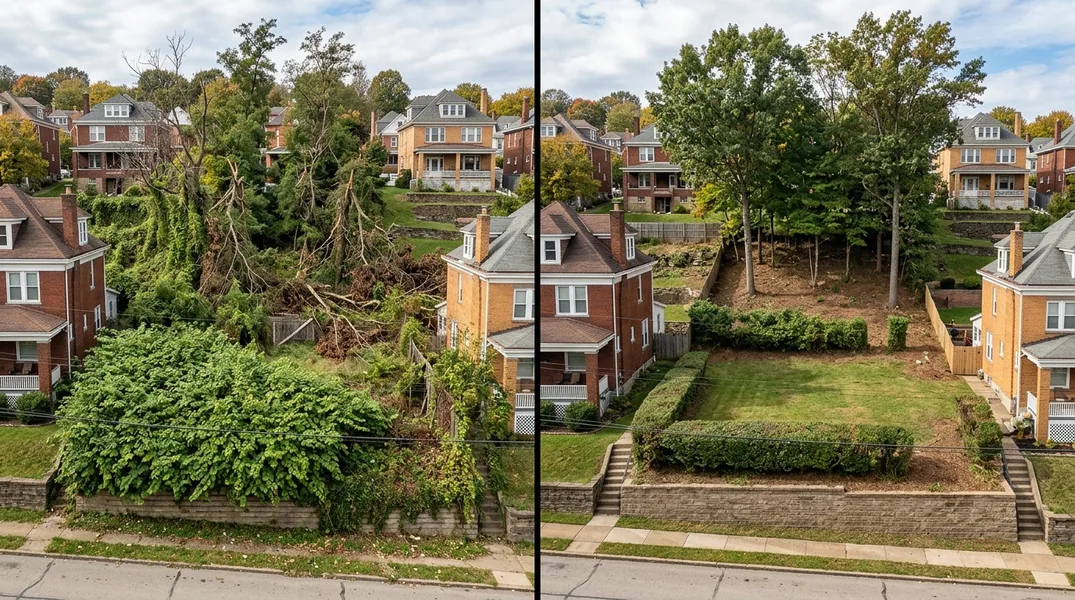
Understanding Ice Storm Damage on the Allegheny Plateau
Winter on the Allegheny Plateau brings a unique challenge that many homeowners underestimate: ice storms. Unlike snow, which slides off branches, ice accumulates in thick, heavy layers that can weigh down even mature trees. When temperatures hover near freezing and precipitation falls as freezing rain, the results can be catastrophic for your landscape. Pittsburgh experiences these conditions regularly, and the damage can range from minor branch breakage to complete tree failure.
The physics of ice storm tree damage is straightforward but devastating. A single inch of ice can add 500 pounds or more to a tree's branches. Trees that evolved in this climate can handle some ice, but weakened, diseased, or poorly pruned trees become casualties. The problem compounds when multiple ice events occur in a single season. Pittsburgh homeowners who ignore preventive care often find themselves dealing with emergency cleanup after the storm passes, when fallen branches block driveways, damage roofs, or worse, create hazards near power lines.
How to Identify Trees at Risk Before Winter Arrives
Not all trees respond equally to ice storms. Certain species, structural weaknesses, and environmental factors make some trees far more vulnerable than others. Deciduous trees with dense, heavy canopies such as oaks, maples, and ash are particularly at risk because they retain their branch structure through winter. Evergreens like pines and spruces also suffer significantly because their needle-laden branches catch and hold ice. If you have these species on your property, paying attention to their condition now can save you thousands in damage later.
Look for warning signs that indicate a tree is stressed or structurally compromised. Trees with multiple trunks, included bark (where bark grows between two branches rather than properly fusing), or large horizontal branches are especially vulnerable to splitting under ice load. Diseased wood, dead branches, or trees leaning away from their natural growth pattern are also red flags. A tree that survived last winter's ice storm may have internal damage you cannot see. The best way to assess your trees accurately is to schedule a professional evaluation. Pittsburgh Tree Service offers free estimate consultations where our certified arborists can identify high-risk trees on your property and recommend the right course of action before the next freeze.
Preventive Tree Trimming Pittsburgh: Your First Line of Defense
Tree Trimming & Pruning is not a cosmetic service; it is a critical investment in tree health and storm resilience. Proper pruning removes dead wood, improves branch structure, and reduces the overall weight and wind resistance of the canopy. When performed correctly in fall and early winter, trimming can significantly reduce the likelihood that your trees will fail under ice load. The goal is to create a more open canopy with better branch spacing, which allows ice to fall through rather than accumulate on major limbs.
Many homeowners make the mistake of waiting until after a storm to trim their trees. By then, it is often too late. Preventive trimming should happen in late fall, before the heaviest ice storms arrive. This timing allows trees to harden off and compartmentalize wounds before winter stress sets in. Professional arborists know which branches to remove to maintain tree health while improving structural integrity. Topping a tree or removing too much canopy can actually weaken it further, so hiring experienced professionals matters. When you contact Pittsburgh Tree Service at (878) 378-9009, our team can schedule your preventive trimming at the optimal time to protect your trees through the winter season.
Tree Splitting Storm Damage: What Happens When Prevention Fails
Despite your best efforts, sometimes ice storms still cause damage. One of the most common and severe forms of damage is tree splitting, where the weight of ice causes the trunk or major branches to crack or split down the middle. This type of damage is particularly destructive because it exposes the tree's interior wood to disease and decay organisms. A tree that splits during a storm may survive for a time, but it is often compromised beyond recovery. The split creates an entry point for insects, fungi, and pathogens that will eventually kill the tree or make it dangerous to keep standing.
If you experience tree splitting storm damage, do not attempt to repair it yourself. Many homeowners think they can wrap a split trunk with cable or tape, but this approach rarely works and can actually harm the tree further. Instead, contact an Emergency Tree Service provider immediately. Pittsburgh Tree Service responds to storm damage calls 24/7. Our team can assess whether a split tree can be saved or whether Tree Removal is necessary. Prompt action prevents the tree from failing completely and potentially causing injury or property damage.
Storm Preparation Checklist for Pittsburgh Homeowners
Preparing your property for ice storm season requires more than just hoping for the best. A proactive approach involves several concrete steps you can take now to minimize risk. Start by walking your property and identifying all trees within striking distance of your home, garage, deck, or power lines. Pay special attention to trees that hang over your roof or those near windows. These are your highest priority trees for preventive care. Next, remove any dead branches you can safely access, and clear gutters and downspouts so water can drain properly if ice dams form.
Schedule professional Tree Trimming & Pruning for high-risk trees before December arrives. Document your trees with photos taken from multiple angles, as this documentation can help with insurance claims if damage does occur. Trim back branches that overhang structures or power lines, and consider having a professional arborist cable or brace trees with weak branch angles. Finally, develop an emergency response plan: know which local tree services offer emergency response, keep their contact information accessible, and understand your insurance coverage for tree damage. Pittsburgh Tree Service can help with every step of this preparation. Call us at (878) 378-9009 to discuss your specific situation and get started on a storm-ready landscape.
When to Call a Professional Tree Service Near Me
Knowing when to call a professional is crucial. If you notice any of these conditions, do not delay contacting a tree service: large dead branches in the canopy, visible cracks or splits in the trunk, mushrooms or fungal growth on the trunk, significant lean or tilting, or branches that already hang dangerously low. These signs indicate structural problems that will only worsen under ice load. Similarly, if a tree has already suffered damage from a previous storm, it needs professional evaluation before the next event. Trees with included bark, multiple leaders, or those that have been topped or severely pruned in the past are also candidates for professional assessment.
The cost of preventive care is far less than the cost of emergency removal, property damage repair, or potential injury. When you invest in professional tree care now, you avoid the stress and expense of dealing with storm damage later. Pittsburgh Tree Service serves the entire region with certified arborists who understand the specific challenges of ice storms on the Allegheny Plateau. Whether you need a free estimate for preventive trimming or emergency response after a storm, we are ready to help. Reach out today at (878) 378-9009 or visit our website to schedule your consultation.
Looking for a professional tree service in Pittsburgh? Pittsburgh Tree Service responds fast for all your tree service needs.
Get a Free QuoteOur services: Tree Removal · Tree Trimming & Pruning · Stump Grinding